Play School in Pitampura – As a parent in Pitampura exploring the best play schools for your child, you’ve likely come across terms like “Montessori” and “Traditional Play School.”
But what do these approaches actually mean? And how do you decide which one is better for your child’s learning style, personality, and growth?
This detailed guide will break down the key differences between Montessori and traditional preschool education—so you can make a confident, informed choice.
1. What is the Montessori Method?
Developed by Dr. Maria Montessori, this method is:
- Child-led (not teacher-driven)
- Based on hands-on activities and self-paced learning
- Focuses on independence, observation, and exploration
✅ Common Features:
- Mixed-age classrooms (e.g. 2.5–5 years)
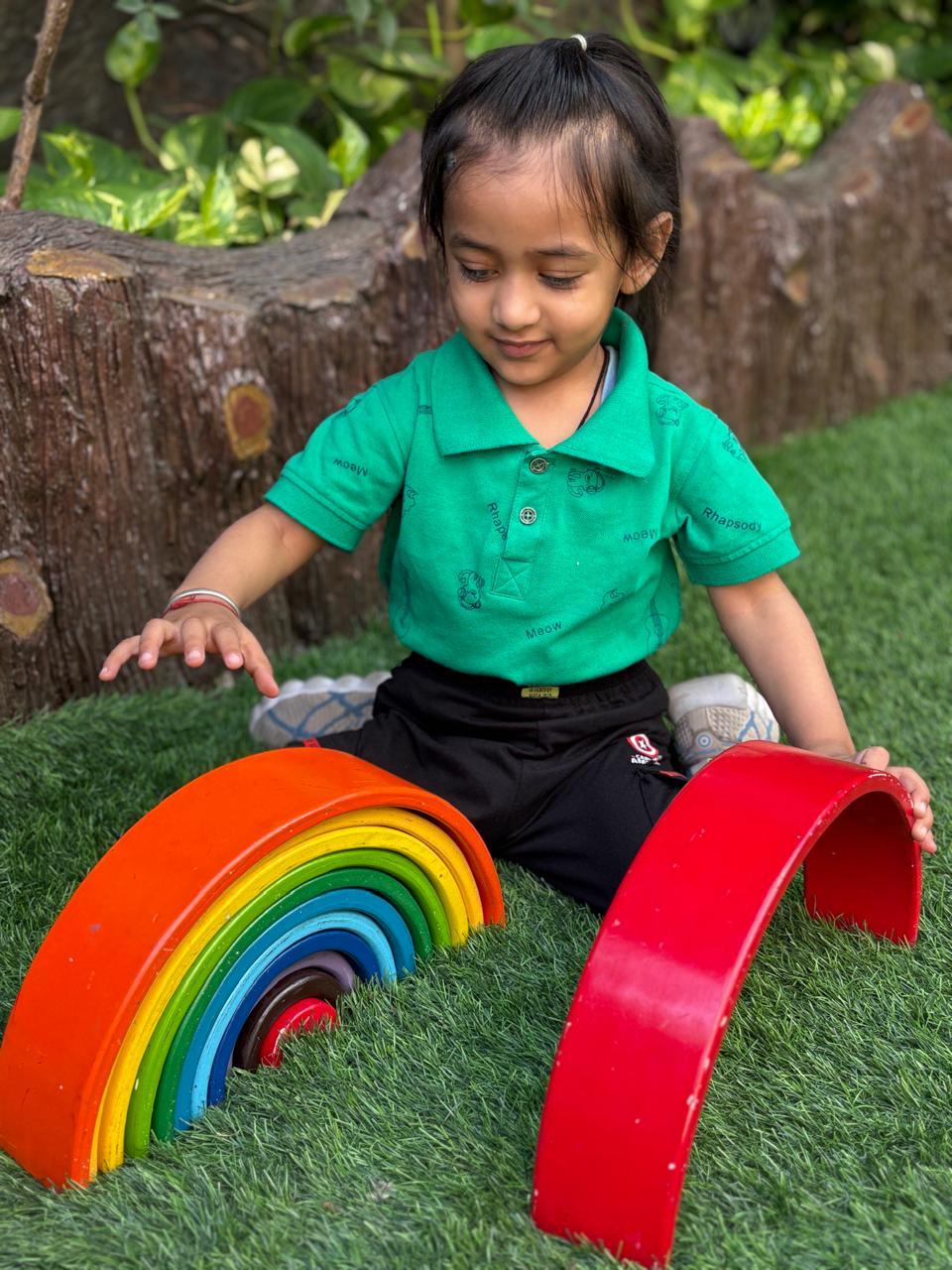
- Wooden Montessori tools (beads, trays, puzzles)
- No strict timetables—children choose what to do
- Teachers act as guides, not instructors
- Calm, structured, non-competitive learning space
2. What is a Traditional Play School?
The traditional method:
- Follows a fixed curriculum and timetable
- Uses rote learning, group activities, rhymes, and storytelling
- Prepares children for primary school structure
✅ Common Features:
- Age-specific classes (Nursery, KG)
- Daily schedule includes circle time, snacks, play, nap
- Focus on following instructions, basic academics, manners
- Teachers lead the activities and monitor participation
- Often includes competitions, stage exposure, and group tasks
3. Montessori vs Traditional – Key Differences
| Feature | Montessori | Traditional Play School |
|---|---|---|
| Learning Style | Child-led | Teacher-led |
| Pace | Individual | Group/Fixed |
| Focus | Independence & Self-Discipline | Academic Readiness & Routine |
| Environment | Calm, Structured | Lively, Structured |
| Assessment | Observation-based | Activity/Worksheet-based |
| Tools Used | Wooden, Purpose-built | Charts, Toys, Flashcards |
| Classroom Type | Mixed-Age Groups | Age-Based Classes |
4. Which One is Right for Your Child?
Montessori is Ideal If:
- Your child is independent, quiet, curious
- You prefer a non-academic, holistic start
- You value creativity, hands-on activities, and life skills
Traditional is Ideal If:
- Your child loves rhymes, group play, routines
- You want early exposure to basic academics
- You’re preparing for a more structured primary school
5. Montessori & Traditional Schools in Pitampura
Many top schools in Pitampura offer either one or a blended model.
6. What Do Pitampura Parents Prefer?
🗣️ “Montessori helped my daughter become confident and self-driven.” – Shruti Malhotra, Saraswati Vihar
🗣️ “We chose traditional schooling because we wanted her to follow a schedule before formal school.” – Rakesh Gupta, Kohat Enclave
Both models have helped children thrive. The best choice depends on your child’s temperament, your expectations, and the school’s execution.